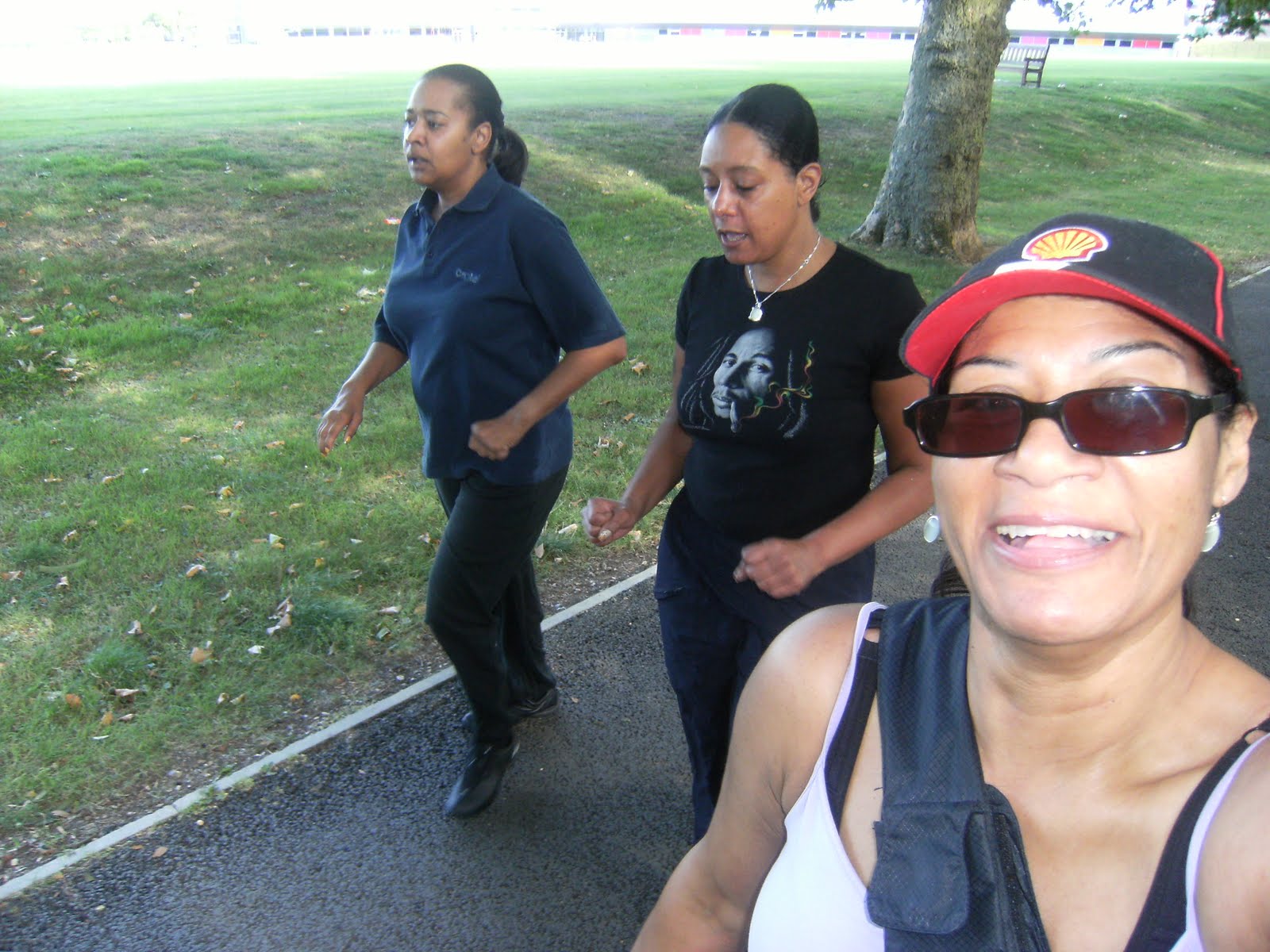
Great video of the London Fit Girls out in the park this morning. The sun was out and boy did I get a tan just doing the circuit. Pat was very brave, being her first time,but she managed to keep up with us and loved the football and the wind down, particularly the wind down....watch the video to see what I mean!
Colette Morris SAC Dip., Diet & Nutrition
If you would like a consultation call or email Email: formula4fitness@ymail.com Tel. 213 261 4233 (usa) 0208 816 7045 (uk)

LONDON FIT GIRLS CLUB - BODY BY VI Weight Loss, Sports Nutrition Weight Management Tips, Advice.
Saturday, 26 June 2010


Tuesday, 15 June 2010
There Are Several Aspects in the Treatment of Diabetes, Each One with a Very Important Role
Written by James Norman MD, FACS, FACE
The mainstays of diabetes treatment are:
1. Working towards obtaining ideal body weight
2. Following a diabetic diet
3. Regular exercise
4. Diabetic medication if needed
Note: Type 1 diabetes must be treated with insulin; if you have type 2 diabetes, you may not need to take insulin. This involves injecting insulin under the skin for it to work. Insulin cannot be taken as a pill because the digestive juices in the stomach would destroy the insulin before it could work. Scientists are looking for new ways to give insulin. But today, shots are the only method. There are, however, new methods to give the shots. Insulin pumps are now being widely used and many people are having great results.
Working towards obtaining ideal body weight
An estimate of ideal body weight can be calculated using this formula:
For women:
Start with 100 pounds for 5 feet tall. Add 5 pounds for every inch over 5 feet. If you are under 5 feet, subtract 5 pounds for each inch under 5 feet. This will give you your ideal weight.
If you have a large frame, add 10%. If you have a small frame, subtract 10%. A good way to decide your frame size is to look at your wrist size compared to other women's.
Example: a woman who is 5' 4" tall and has a large frame.
100 pounds + 20 pounds (4 inches times 5 pounds per inch) =120 pounds.
Add 10% for large frame (in this case 10% of 120 pounds is 12 pounds).
120 pounds + 12 pounds = 132 pounds ideal body weight.
For men:
Start with 106 pounds for a height of 5 foot. Add 6 pounds for every inch above 5 foot.
For a large frame, add 10%. For a small frame, subtract 10%. (See above for further details).
The Diabetic Diet
Diet is very important in diabetes. There are differing philosophies on what is the best diet but below is a guideline with some general principles.
To learn more about meal planning when you have diabetes, sign up for the Diabetic Recipes eNewsletter. It's packed full of easy recipes to help you eat well. We also have the Diabetes Advisor eNewsletter, which has treatment tips and advice from leading experts.
Patients with type 1 diabetes should have a diet that has approximately 35 calories per kg of body weight per day (or 16 calories per pound of body weight per day). If you have a child who has type 1 diabetes, we encourage you to read our article about meal planning for children with type 1 diabetes.
Patients with type 2 diabetes generally are put on a 1500-1800 calorie diet per day to promote weight loss and then the maintenance of ideal body weight. However, this may vary depending on the person's age, sex, activity level, current weight and body style. More obese individuals may need more calories initially until their weight is less. This is because it takes more calories to maintain a larger body and a 1600 calorie diet for them may promote weight loss that is too fast to be healthy.
Men have more muscle mass in general and therefore may require more calories. Muscle burns more calories per hour than fat. (Thus also one reason to regularly exercise and build up muscle!) Also, people whose activity level is low will have less daily caloric needs.
Generally, carbohydrates should make up about 50% of the daily calories (with the accepted range 40%-60%). In general, lower carbohydrate intake is associated with lower sugar levels in the blood. However the benefits of this can be cancelled out by the problems associated with a higher fat diet taken in to compensate for the lower amount of carbohydrates. This problem can be improved by substituting monounsaturated and polyunsaturated fats for saturated fats.
Most people with diabetes find that it is quite helpful to sit down with a dietitian or nutritionist for a consult about what is the best diet for them and how many daily calories they need. It is quite important for diabetics to understand the principles of carbohydrate counting and how to help control blood sugar levels through proper diet. Below are some general principles about the diabetic diet.
Try out our carb counting quiz to test how well you know your carbohydrates.
Understanding Food Groups
There are three basic food groups: fats, proteins, and carbohydrates. The carbohydrates are the foods that can be broken down into sugar. It is essential to have all three food groups in your diet to have good nutrition.
1. Why Count Carbohydrates?
Carbohydrates make your blood glucose level go up. If you know how much carbohydrates you've eaten, you have a good idea what your blood glucose level is going to do. The more carbohydrates you eat, the higher your blood sugar will go up.
2. Which Foods Contain Carbohydrates?
Most of the carbohydrate we eat comes from three food groups: starch, fruit, and milk.
Vegetables also contain some carbohydrates, but foods in the meat and fat groups contain very little carbohydrate. Sugars may be added or may be naturally present (such as in fruits).
The nutrient term for sugars can also be identified by looking for -ose at the end of a word ( i.e, glucose, fructose, and sucrose are all sugars). Look for these on food labels to help identify foods that contain sugar.
Below are some examples of carbohydrate grams for some common food items:
To make things easy, many people begin carbohydrate counting by rounding the carbohydrate value of milk up to 15.
In other words, one serving of starch, fruit, or milk contains 15 grams carbohydrate or one carbohydrate serving. Three servings of vegetable also contain 15 grams. Each meal and snack will contain a specific total number of grams of carbohydrate.
For example: Each gram of carbohydrate provides 4 calories. A person with diabetes on a 1600 calorie diet should get 50% of these calories from carbohydrate. This would be a total of 800 calories of carbohydrates (at 4 calories per gram) spread out over the day. At 15 grams per exchange, this would be about 13 exchanges of carbohydrate per day.
The amount of food you eat is closely related to blood sugar control. If you eat more food than is recommended on your meal plan, your blood sugar goes up. Although foods containing carbohydrate (carb) have the most impact on blood sugars, the calories from all foods will affect blood sugar. The only way you can tell if you are eating the right amount is to measure your foods carefully. Also, it is important to space your carbohydrates out throughout the day to avoid sugar "loading." Measuring your blood sugar regularly also provides important feedback on how high your sugar went based on what you ate and your level of activity.
Where Do You Get Carbohydrate Information?
The "Nutrition Facts" label on most foods is the best way to get carbohydrate information, but not all foods have labels. Your local bookstore and library have books that list the carbohydrate in restaurant foods, fast foods, convenience foods and fresh foods. You will still need to weigh or measure the foods to know the amount of grams of carbohydrates present.
How Do You Count Carbohydrates?
Carbohydrates can be counted in number of grams or can be counted as exchanges. One carbohydrate exchange equals 15 grams of carbohydrate.
Free Foods
These are foods that you can eat without counting. A free food or drink is one that contains less than 20 calories and 5 grams or less of carbohydrate per serving. If your serving of a food contains more than 5 grams of carbohydrate, you should count it in your meal plan.
Examples of free foods:
* Bouillon or broth
* Carbonated or mineral water
* Club soda
* Coffee or tea
* Diet soft drinks
* Drink mixes, sugar-free
* Tonic water, sugar free
* Sugar-free hard candy
* Sugar-free Jell-O
* Sugar-free gum
* Jam or jelly, light or low-sugar, 2 tsp.
* Sugar free syrup, 2 tsp.
You should spread out free foods throughout the day and not eat them in one sitting.
Fitting Sugar in Your Meal Plan
It is commonly thought that people with diabetes should avoid all forms of sugar. Most people with diabetes can eat foods containing sugar as long as the total amount of carbohydrate (carb) for that meal or snack is consistent. Many research studies have shown that meals which contain sugar do not make the blood sugar rise higher than meals of equal carbohydrate levels which do not contain sugar. However, if the sugar-containing meal contains more carb, the blood sugar levels will go up.
Can I Eat Cake and Not Worry About It?
No! A slice of white cake with chocolate icing (1/12 of a cake or 80 gram weight) will give you about 300 calories, 45 grams of carbs, and 12 grams of fat. That is three starch servings and over 2 fat servings.
Before you have a slice of cake, ask yourself the following questions: Will that small piece of cake be satisfying or will I still be hungry? How it will fit into my meal plan? Do I have 300 calories to "spend" on this? Are there other choices I could make which would contribute less fat?
A 1/12 slice of angel food cake has less than 1 gram of fat and only 30 carb. This may be a better choice.
Controlling All Carbohydrates
It is important to realize that sugar is not the only carbohydrate that you have to "control". The body will convert all carbohydrates to glucose, so eating extra servings of rice, pasta, bread, fruit, or other carbohydrate foods will make the blood sugar rise. Just because something doesn't have sugar in it doesn't mean you can eat as much as you want. Your meal plan is designed so that the carbohydrate content of your meals remains as consistent as possible from day to day.
A Word of Caution
Although sugar does not cause the blood sugar to rise any higher than other carbohydrates, it should be eaten along with other healthy foods. If you choose to drink a 12 ounce can of a sugar-sweetened soft drink, that would use up about 45 grams carb, and you wouldn't have gotten any nutrition (protein, vitamins, or minerals). What a waste of calories!
High sugar foods are more concentrated in carb. Therefore the volume would be smaller than a low sugar food. High sugar foods might not be a good choice if they will just tempt you to eat more. If you would rather eat larger portions, select low sugar choices.
Look at the differences in portion size you get for equal amounts of carbohydrate in these cereals!
In addition, many sugar-containing foods also contain a lot of fat. Foods such as cookies, pastries, ice cream and cakes should be avoided largely because of the fat content and because they don't contribute much nutritional value. If you do want a "sweet," make a low-fat choice, such as low-fat frozen yogurt, gingersnaps, fig bars, or graham crackers and substitute it for other carbohydrates on your meal plan.
Colette Morris
If you would like a consultation call or email Email: formula4fitness@ymail.com
Tel. 213 261 4233 (usa) 0208 816 7045 (uk)
The mainstays of diabetes treatment are:
1. Working towards obtaining ideal body weight
2. Following a diabetic diet
3. Regular exercise
4. Diabetic medication if needed
Note: Type 1 diabetes must be treated with insulin; if you have type 2 diabetes, you may not need to take insulin. This involves injecting insulin under the skin for it to work. Insulin cannot be taken as a pill because the digestive juices in the stomach would destroy the insulin before it could work. Scientists are looking for new ways to give insulin. But today, shots are the only method. There are, however, new methods to give the shots. Insulin pumps are now being widely used and many people are having great results.
Working towards obtaining ideal body weight
An estimate of ideal body weight can be calculated using this formula:
For women:
Start with 100 pounds for 5 feet tall. Add 5 pounds for every inch over 5 feet. If you are under 5 feet, subtract 5 pounds for each inch under 5 feet. This will give you your ideal weight.
If you have a large frame, add 10%. If you have a small frame, subtract 10%. A good way to decide your frame size is to look at your wrist size compared to other women's.
Example: a woman who is 5' 4" tall and has a large frame.
100 pounds + 20 pounds (4 inches times 5 pounds per inch) =120 pounds.
Add 10% for large frame (in this case 10% of 120 pounds is 12 pounds).
120 pounds + 12 pounds = 132 pounds ideal body weight.
For men:
Start with 106 pounds for a height of 5 foot. Add 6 pounds for every inch above 5 foot.
For a large frame, add 10%. For a small frame, subtract 10%. (See above for further details).
The Diabetic Diet
Diet is very important in diabetes. There are differing philosophies on what is the best diet but below is a guideline with some general principles.
To learn more about meal planning when you have diabetes, sign up for the Diabetic Recipes eNewsletter. It's packed full of easy recipes to help you eat well. We also have the Diabetes Advisor eNewsletter, which has treatment tips and advice from leading experts.
Patients with type 1 diabetes should have a diet that has approximately 35 calories per kg of body weight per day (or 16 calories per pound of body weight per day). If you have a child who has type 1 diabetes, we encourage you to read our article about meal planning for children with type 1 diabetes.
Patients with type 2 diabetes generally are put on a 1500-1800 calorie diet per day to promote weight loss and then the maintenance of ideal body weight. However, this may vary depending on the person's age, sex, activity level, current weight and body style. More obese individuals may need more calories initially until their weight is less. This is because it takes more calories to maintain a larger body and a 1600 calorie diet for them may promote weight loss that is too fast to be healthy.
Men have more muscle mass in general and therefore may require more calories. Muscle burns more calories per hour than fat. (Thus also one reason to regularly exercise and build up muscle!) Also, people whose activity level is low will have less daily caloric needs.
Generally, carbohydrates should make up about 50% of the daily calories (with the accepted range 40%-60%). In general, lower carbohydrate intake is associated with lower sugar levels in the blood. However the benefits of this can be cancelled out by the problems associated with a higher fat diet taken in to compensate for the lower amount of carbohydrates. This problem can be improved by substituting monounsaturated and polyunsaturated fats for saturated fats.
Most people with diabetes find that it is quite helpful to sit down with a dietitian or nutritionist for a consult about what is the best diet for them and how many daily calories they need. It is quite important for diabetics to understand the principles of carbohydrate counting and how to help control blood sugar levels through proper diet. Below are some general principles about the diabetic diet.
Try out our carb counting quiz to test how well you know your carbohydrates.
Understanding Food Groups
There are three basic food groups: fats, proteins, and carbohydrates. The carbohydrates are the foods that can be broken down into sugar. It is essential to have all three food groups in your diet to have good nutrition.
1. Why Count Carbohydrates?
Carbohydrates make your blood glucose level go up. If you know how much carbohydrates you've eaten, you have a good idea what your blood glucose level is going to do. The more carbohydrates you eat, the higher your blood sugar will go up.
2. Which Foods Contain Carbohydrates?
Most of the carbohydrate we eat comes from three food groups: starch, fruit, and milk.
Vegetables also contain some carbohydrates, but foods in the meat and fat groups contain very little carbohydrate. Sugars may be added or may be naturally present (such as in fruits).
The nutrient term for sugars can also be identified by looking for -ose at the end of a word ( i.e, glucose, fructose, and sucrose are all sugars). Look for these on food labels to help identify foods that contain sugar.
Below are some examples of carbohydrate grams for some common food items:
Food | Amount | Carb grams | Food | Amount | Carb grams |
1 % fat milk | 1 cup | 12 | yogurt fruited | 1 cup | 40 |
Bran Chex | 2/3 cup | 23 | yogurt fruit | 1 cup | 19 |
Frosted Flakes | 3/4 cup | 26 | Raisin Bran | 3/4 cup | 28 |
fruit juice | 1/2 cup | 15 | bread/toast | 1 slice | 15 |
banana | 1/2 | 15 | sugar | 1 tsp. | 4 |
pancake syrup | 2 Tbsp. | 30 | pancakes - 4 | 2 | 15 |
low-fat granola | 1/2 cup | 30 | sugar-free syrup | 2 Tbsp. | 4 |
To make things easy, many people begin carbohydrate counting by rounding the carbohydrate value of milk up to 15.
In other words, one serving of starch, fruit, or milk contains 15 grams carbohydrate or one carbohydrate serving. Three servings of vegetable also contain 15 grams. Each meal and snack will contain a specific total number of grams of carbohydrate.
For example: Each gram of carbohydrate provides 4 calories. A person with diabetes on a 1600 calorie diet should get 50% of these calories from carbohydrate. This would be a total of 800 calories of carbohydrates (at 4 calories per gram) spread out over the day. At 15 grams per exchange, this would be about 13 exchanges of carbohydrate per day.
The amount of food you eat is closely related to blood sugar control. If you eat more food than is recommended on your meal plan, your blood sugar goes up. Although foods containing carbohydrate (carb) have the most impact on blood sugars, the calories from all foods will affect blood sugar. The only way you can tell if you are eating the right amount is to measure your foods carefully. Also, it is important to space your carbohydrates out throughout the day to avoid sugar "loading." Measuring your blood sugar regularly also provides important feedback on how high your sugar went based on what you ate and your level of activity.
Where Do You Get Carbohydrate Information?
The "Nutrition Facts" label on most foods is the best way to get carbohydrate information, but not all foods have labels. Your local bookstore and library have books that list the carbohydrate in restaurant foods, fast foods, convenience foods and fresh foods. You will still need to weigh or measure the foods to know the amount of grams of carbohydrates present.
How Do You Count Carbohydrates?
Carbohydrates can be counted in number of grams or can be counted as exchanges. One carbohydrate exchange equals 15 grams of carbohydrate.
Free Foods
These are foods that you can eat without counting. A free food or drink is one that contains less than 20 calories and 5 grams or less of carbohydrate per serving. If your serving of a food contains more than 5 grams of carbohydrate, you should count it in your meal plan.
Examples of free foods:
* Bouillon or broth
* Carbonated or mineral water
* Club soda
* Coffee or tea
* Diet soft drinks
* Drink mixes, sugar-free
* Tonic water, sugar free
* Sugar-free hard candy
* Sugar-free Jell-O
* Sugar-free gum
* Jam or jelly, light or low-sugar, 2 tsp.
* Sugar free syrup, 2 tsp.
You should spread out free foods throughout the day and not eat them in one sitting.
Fitting Sugar in Your Meal Plan
It is commonly thought that people with diabetes should avoid all forms of sugar. Most people with diabetes can eat foods containing sugar as long as the total amount of carbohydrate (carb) for that meal or snack is consistent. Many research studies have shown that meals which contain sugar do not make the blood sugar rise higher than meals of equal carbohydrate levels which do not contain sugar. However, if the sugar-containing meal contains more carb, the blood sugar levels will go up.
Can I Eat Cake and Not Worry About It?
No! A slice of white cake with chocolate icing (1/12 of a cake or 80 gram weight) will give you about 300 calories, 45 grams of carbs, and 12 grams of fat. That is three starch servings and over 2 fat servings.
Before you have a slice of cake, ask yourself the following questions: Will that small piece of cake be satisfying or will I still be hungry? How it will fit into my meal plan? Do I have 300 calories to "spend" on this? Are there other choices I could make which would contribute less fat?
A 1/12 slice of angel food cake has less than 1 gram of fat and only 30 carb. This may be a better choice.
Controlling All Carbohydrates
It is important to realize that sugar is not the only carbohydrate that you have to "control". The body will convert all carbohydrates to glucose, so eating extra servings of rice, pasta, bread, fruit, or other carbohydrate foods will make the blood sugar rise. Just because something doesn't have sugar in it doesn't mean you can eat as much as you want. Your meal plan is designed so that the carbohydrate content of your meals remains as consistent as possible from day to day.
A Word of Caution
Although sugar does not cause the blood sugar to rise any higher than other carbohydrates, it should be eaten along with other healthy foods. If you choose to drink a 12 ounce can of a sugar-sweetened soft drink, that would use up about 45 grams carb, and you wouldn't have gotten any nutrition (protein, vitamins, or minerals). What a waste of calories!
High sugar foods are more concentrated in carb. Therefore the volume would be smaller than a low sugar food. High sugar foods might not be a good choice if they will just tempt you to eat more. If you would rather eat larger portions, select low sugar choices.
Look at the differences in portion size you get for equal amounts of carbohydrate in these cereals!
Granola | Frosted Flakes | Corn Flakes | Cheerios | Puffed Wheat |
1/4 cup | 1/3 cup | 3/4 cup | 1 cup | 1 1/4 cup |
In addition, many sugar-containing foods also contain a lot of fat. Foods such as cookies, pastries, ice cream and cakes should be avoided largely because of the fat content and because they don't contribute much nutritional value. If you do want a "sweet," make a low-fat choice, such as low-fat frozen yogurt, gingersnaps, fig bars, or graham crackers and substitute it for other carbohydrates on your meal plan.
Colette Morris
If you would like a consultation call or email Email: formula4fitness@ymail.com
Tel. 213 261 4233 (usa) 0208 816 7045 (uk)
Thursday, 3 June 2010
Strawberries and ??? What's your flavour?
Short Video from LFGC member Colette on the benefits of having a smoothie for breakfast. Aside from being quick and easy to prepare, it is also easier on the digestive system first thing in the morning. Packed with Protein to keep away the hunger pangs, a truly fast food type of breakfast you can take away with you if you are in a hurry....
If you are on a weight loss diet, then having two smoothies like this per day with two to three snacks and a regular meal will aid weight loss, but you must consult your physician first. Also, if you have a lot of weight to lose it is always advisable to contact a qualified nutritionist to work with you.
Colette Morris S.A.C. Dip,(Diet & Nutrition), F.R.S.A,
If you would like a consultation call or email Email: formula4fitness@ymail.com Tel. 213 261 4233 (usa) 0208 816 7045 (uk)
If you are on a weight loss diet, then having two smoothies like this per day with two to three snacks and a regular meal will aid weight loss, but you must consult your physician first. Also, if you have a lot of weight to lose it is always advisable to contact a qualified nutritionist to work with you.
Colette Morris S.A.C. Dip,(Diet & Nutrition), F.R.S.A,
If you would like a consultation call or email Email: formula4fitness@ymail.com Tel. 213 261 4233 (usa) 0208 816 7045 (uk)
Sunday, 16 May 2010
Benefits of Bike Riding
It's been a while since we updated the blog,but lots have been happening in the offline world. This weekend started out great on Saturday and LFGC member Colette decided to get out there on her Bike.
Now, if you are going to go out riding, ensure you have the right equipment, safety helmet, riding shorts (yes it can get pretty sore between your groin if you are doing long rides,so the extra padding helps), and a drink to hydrate while you ride.
That said, go watch the video and don't forget to leave a comment on my blog and on you tube please :)
Colette Morris. Sac Dip, Diet & Nutrition
If you would like a consultation call or email
Email: formula4fitness@ymail.com
Tel. 213 261 4233 (usa)
Tel. 0208 816 7045 (uk)
Catch me on Twitter: @workfmhomeDiva
Now, if you are going to go out riding, ensure you have the right equipment, safety helmet, riding shorts (yes it can get pretty sore between your groin if you are doing long rides,so the extra padding helps), and a drink to hydrate while you ride.
That said, go watch the video and don't forget to leave a comment on my blog and on you tube please :)
Colette Morris. Sac Dip, Diet & Nutrition
If you would like a consultation call or email
Email: formula4fitness@ymail.com
Tel. 213 261 4233 (usa)
Tel. 0208 816 7045 (uk)
Catch me on Twitter: @workfmhomeDiva
Monday, 12 April 2010
Quickie - 5 Day Detox
Starting a 5 day detox diet is easy and I'll show you how easy it can be. You can make your own detox diet plan if you want to, it's as easy as going to the supermarket and buying fruits and veggies!
A detox diet is not enough to improve your health. The best thing you can do is to start improving your normal diet, but a detoxification diet like this will definitely boost your health.
The First Day
 Today's goal is to remove unhealthy foods and drinks from your diet. They are taxing your digestive system and they have to go!
That means almost everything that comes in a package or in a box, and anything containing:
Did you know that SLS is a detergent used in the cleaning industry? It irritates the skin and gets absorbed into your body where it does long-term damage if used often. So for your personal care products, stop using them and go out and buy natural alternatives.
When you go out and buy a better shampoo, make sure you read the label and look what's in it. If you can't pronounce it, you probably should not use it. The simpler the shampoo is the better.
The Second Day
 Alright, now you should have almost eliminated the bad stuff. Don't worry if you haven'. You still have time to do it on the second day, but that's it, no more slacking on this 5 day detox diet!
Are you wondering what you should eat now that you've eliminated all of your foods?
No problem! Today we start adding the healthy stuff. And I am mainly talking about fruits, vegetables, nuts and seeds. You can eat and buy as much fruit and vegetables as you want.
You can eat the fruits as they are or you can get creative and make fruit salads, smoothies, purées or whatever wets your taste buds.
As for the vegetables, you can make vegetable broths, freshly squeezed juices or just eat them raw in a salad with some nuts.
Don't go overboard with the nuts. Limit yourself to around two handfuls of nuts per day, otherwise you will be getting too much fat in your diet and this will tax your digestive system.
Buy all your produce fresh, raw and organic if possible. If you live in an area where organic produce is not available then buy the next best thing.
Avoid canned, frozen and packaged products at all costs, these are highly processed and are not particularly healthy.
And if you want to, you can eat potatoes, rice and quinoa, but try to keep those to a minimum.
The Third Day
 Now you're realizing that this really isn't that hard and eating all those yummy fruits is quite rewarding.
When you eat a large amount of fruit you get a lot of water, because fruits are packed with water and the water is very clean and healthy.
Nonetheless, I recommend that you drink half you bodyweight in ounces every day. So if you're 150 pounds, you should drink at least 75 ounces of pure water. Water is very important in because it helps transport the toxins out of your system.
Keep experimenting with different fruits and vegetables. Even if you do not like some vegetables, eat them anyway, I dare you! :)
The Fourth Day
 Phew! Already on the fourth day are we? You're almost done with this 5 day detox diet. Today I want you to try to add some fresh juices, that means squeezing the juice yourself and drinking it immediately.
If you do not have a juicer then considering buying one. If you feel like you don't need a juicer then carry onward without the juices, no problem!
I want you to replace two of your meals with freshly squeezed juices. You can blend any fruits and vegetables that you like. Try not to skip the vegetables. They can taste bad, but they are vital for your body!
The Fifth Day
 You're almost done! If you've made it this far then congratulations!
Today you'll be on cruise control eating your fruits, veggies, nuts and seeds alongside your two daily juices.
More can be found from the link here
Colette Morris
If you would like a consultation call or email
Email: formula4fitness@ymail.com
Tel. 213 261 4233 (usa)
0208 816 7045 (uk)
In the world we live in today, our body has to constantly cope with:
- Additives
- Chemicals
- Flavoring
- Herbicide
- Pesticides
- Pollution
- Sweeteners
A detox diet is not enough to improve your health. The best thing you can do is to start improving your normal diet, but a detoxification diet like this will definitely boost your health.
The First Day
Today's goal is to remove unhealthy foods and drinks from your diet. They are taxing your digestive system and they have to go! That means almost everything that comes in a package or in a box, and anything containing:
- Additives
- Flavoring
- Oils
- Sugar
- Sweeteners
Did you know that SLS is a detergent used in the cleaning industry? It irritates the skin and gets absorbed into your body where it does long-term damage if used often. So for your personal care products, stop using them and go out and buy natural alternatives.
When you go out and buy a better shampoo, make sure you read the label and look what's in it. If you can't pronounce it, you probably should not use it. The simpler the shampoo is the better.
The Second Day
Alright, now you should have almost eliminated the bad stuff. Don't worry if you haven'. You still have time to do it on the second day, but that's it, no more slacking on this 5 day detox diet! Are you wondering what you should eat now that you've eliminated all of your foods?
No problem! Today we start adding the healthy stuff. And I am mainly talking about fruits, vegetables, nuts and seeds. You can eat and buy as much fruit and vegetables as you want.
You can eat the fruits as they are or you can get creative and make fruit salads, smoothies, purées or whatever wets your taste buds.
As for the vegetables, you can make vegetable broths, freshly squeezed juices or just eat them raw in a salad with some nuts.
Don't go overboard with the nuts. Limit yourself to around two handfuls of nuts per day, otherwise you will be getting too much fat in your diet and this will tax your digestive system.
Buy all your produce fresh, raw and organic if possible. If you live in an area where organic produce is not available then buy the next best thing.
Avoid canned, frozen and packaged products at all costs, these are highly processed and are not particularly healthy.
And if you want to, you can eat potatoes, rice and quinoa, but try to keep those to a minimum.
The Third Day
Now you're realizing that this really isn't that hard and eating all those yummy fruits is quite rewarding.When you eat a large amount of fruit you get a lot of water, because fruits are packed with water and the water is very clean and healthy.
Nonetheless, I recommend that you drink half you bodyweight in ounces every day. So if you're 150 pounds, you should drink at least 75 ounces of pure water. Water is very important in because it helps transport the toxins out of your system.
Keep experimenting with different fruits and vegetables. Even if you do not like some vegetables, eat them anyway, I dare you! :)
The Fourth Day
Phew! Already on the fourth day are we? You're almost done with this 5 day detox diet. Today I want you to try to add some fresh juices, that means squeezing the juice yourself and drinking it immediately.If you do not have a juicer then considering buying one. If you feel like you don't need a juicer then carry onward without the juices, no problem!
I want you to replace two of your meals with freshly squeezed juices. You can blend any fruits and vegetables that you like. Try not to skip the vegetables. They can taste bad, but they are vital for your body!
The Fifth Day
You're almost done! If you've made it this far then congratulations!Today you'll be on cruise control eating your fruits, veggies, nuts and seeds alongside your two daily juices.
More can be found from the link here
Colette Morris
If you would like a consultation call or email
Email: formula4fitness@ymail.com
Tel. 213 261 4233 (usa)
0208 816 7045 (uk)
Saturday, 10 April 2010
Getting Motivated to Lose Weight and Tone Up
We are now at the start of Summer officially and the weather here in the UK has been really great for the past week. The sun seams to bring out energy and vitality in alot of us.
If you want to lose a few pounds, the best way would be to find a buddy to lose the weight with. Ask around, sometimes others want to lose weight, but don't have an incentive to. If you have young children now is the time to take them out to the local park, if they have bicycles, let them ride while you jog along. Or alternately you could also get a bicycle of your own and ride along with them.
If you find going to the gym boring, as many of us do,then find other activities that you enjoy, this could be dancing, yoga, swimming, salsa, martial arts, badminton, tennis etc. The secret is to do lots of different activities during the week so you do not get bored or stuck in a routine. Also if you are doing lots of different things your body is burning calories at different rates which will aid weight loss.
Try and do at least 30 minutes of exercise 4 to 5 times a week. If you cant get to do a straight 30 minute slot, then break it down into three lots of 10 minute slots instead. Walking is also good, but you need to vary the pace when you are walking, fast,slow, uphill, downhill.
I go out with my friends every Saturday and we meet at a local park and then do a number of different exercises around the park.
Colette Morris
If you would like a consultation call or email
Email: formula4finess@ymail.com
Tel. 213 261 4233 (usa)
0208 816 7045 (uk)
Thursday, 18 March 2010
P90X System Trending on Weight LossCircuit
So what is this P90X system? And why are so many celebrities using this to get back into shape.
P90X® is a revolutionary system of 12 sweat-inducing, muscle-pumping workouts, designed to transform your body from regular to ripped in just 90 days. You'll also receive a comprehensive 3-phase nutrition plan, specially designed supplement options, a detailed fitness guide, a calendar to track your progress, online peer support, and much more. Your personal trainer, Tony Horton, will keep you engaged every step of the way, and you won't believe your results!
The secret behind the P90X system is an advanced training technique called Muscle Confusion™, which accelerates the results process by constantly introducing new moves and routines so your body never plateaus, and you never get bored! Whether you want to get lean, bulk up, or just plain get ripped, there's an endless variety of ways to mix and match the routines to keep you motivated the full 90 days and beyond!
Colette Morris
If you would like a consultation call or email
Email: formula4finess@ymail.com
Tel. 213 261 4233 (usa)
0208 816 7045 (uk)
P90X® is a revolutionary system of 12 sweat-inducing, muscle-pumping workouts, designed to transform your body from regular to ripped in just 90 days. You'll also receive a comprehensive 3-phase nutrition plan, specially designed supplement options, a detailed fitness guide, a calendar to track your progress, online peer support, and much more. Your personal trainer, Tony Horton, will keep you engaged every step of the way, and you won't believe your results!
The secret behind the P90X system is an advanced training technique called Muscle Confusion™, which accelerates the results process by constantly introducing new moves and routines so your body never plateaus, and you never get bored! Whether you want to get lean, bulk up, or just plain get ripped, there's an endless variety of ways to mix and match the routines to keep you motivated the full 90 days and beyond!
Colette Morris
If you would like a consultation call or email
Email: formula4finess@ymail.com
Tel. 213 261 4233 (usa)
0208 816 7045 (uk)
Tuesday, 16 March 2010
100 Life Saving Health Food Tips
Great video showing some foods that have healing qualities.
Colette Morris
If you would like a consultation call or email
Email: formula4finess@ymail.com
Tel. 213 261 4233 (usa)
0208 816 7045 (uk)
Colette Morris
If you would like a consultation call or email
Email: formula4finess@ymail.com
Tel. 213 261 4233 (usa)
0208 816 7045 (uk)
Friday, 12 March 2010
Great Family Work Out You CanDO with Your Kids...
Luann Abrams
March 12, 2010 by Joe Gigantino
We’ve all had those days when there is simply too much going on to get in that workout you know you need. You have barely seen your family except to pass them as you are rushing out the door, and you feel too guilty to run off to the gym. Here is the perfect solution: a great full body workout plus playtime with your kids. Try it the next time life gets too hectic!
Here’s Luann’s choice for one of her best family workouts. Luann Abrams is an ACE certified personal trainer who focuses on family fitness. She trains clients and teaches family fitness classes in her community. You can always find fun family fitness ideas at her blog, Training For Fun or follow her on Twitter at @Trainforfun.
Family Workout Routine:
Find a place to run in your house–a hallway works great. If the weather is nice take it outside in your yard or on the sidewalk. Run back and forth chasing each other (for the little kids) or timing each other (for the older kids) while incorporating the following sports conditioning moves:
High Knees – Stand straight and lift your knees up to hip-level as you run.
Butt Kicks – Hit your butt with your heels as you run. Land softly on the balls of your feet.
Jump Skip – Jump and drive your bent knee straight up as you skip forward, exaggerating your natural arm movements.
Walking Lunges – Step forward with your first leg landing heel first. Lower body by bending both knees until back knee nearly touches the floor. Lift yourself up using both legs and step forward and repeat with the opposite leg.
Ski jumps – Jump along an imaginary line down the middle of your course. Starting on one side with knees slightly bent and feet angled at about 45 degrees toward the line, jump over the line turning so knees and toes are at a 45 degree angle toward the line on the other side. Jump to one end and then repeat jumping backwards to the other end of your course.
Jumps – Just jump! Remember to land softly, which means you have to use your muscles to slow the momentum of your lowering body and not lockout your knees. Add an obstacle, or several, that you have to jump over.
Stairs – If you have stairs, you have a built-in workout machine. Running up and down the stairs two-at-a-time, sideways, and backwards is a phenomenal workout. Carry a weight (or your kid!) to really amp up your calorie burn. You may want to skip this with younger kids until they are sure-footed.
Drop and Give Me – At either end of your course, have a mat or towel where you perform a different exercise such as push-ups, crunches, or tricep dips, each time through.
Feel free to leave comments or ask me questions. Have a great workout and next time you need to squeeze in a workout into your busy week, don’t forget to include your best workout buddy’s – your family!
Colette Morris
If you would like a consultation call or email
Email: formula4finess@ymail.com
Tel. 213 261 4233 (usa)
0208 816 7045 (uk)
Sunday, 7 March 2010
Taking up the Exercise Challenge
Sometimes you have to push yourself if you want a change to come. Being on Holiday a couple of weeks ago in Lanzarote helped to kick start my keep fit routine and my quest to get back into shape after the Christmas Holidays and all the festive eating. Here is a picture of me, taken yesterday the 6th of March down at WIllesdent Sports Centre, now the weather was 'fresh' but LFGC member Lorna met up with me and we went jogging, power walking and more. By the end of this I felt good, and had lots of energy for the rest of the day.
I love the outdoors, and being in the UK in the cold and grey, snow and rainy weather is not very inspiring to anyone who wishes to get back into an exercise routine. Now some of you are gym goers, but being inside working away on a machine is not for me, it is an artificial environment and un-inspiring or me personally.
Finding something you enjoy such can be far better for you if it is done consistently such as line dancing, salsa, tae kwando, pole dancing, horse riding etc.
My challenge to you all is to find something that inspires you,something you like to do and something which you would consistently be able to do which helps your heart to race.
Let me know what it is you like to do and let me know how you get on...
Colette Morris
If you would like a consultation call or email
Email: formula4finess@ymail.com
Tel. 213 261 4233 (usa)
0208 816 7045 (uk)
I love the outdoors, and being in the UK in the cold and grey, snow and rainy weather is not very inspiring to anyone who wishes to get back into an exercise routine. Now some of you are gym goers, but being inside working away on a machine is not for me, it is an artificial environment and un-inspiring or me personally.
Finding something you enjoy such can be far better for you if it is done consistently such as line dancing, salsa, tae kwando, pole dancing, horse riding etc.
My challenge to you all is to find something that inspires you,something you like to do and something which you would consistently be able to do which helps your heart to race.
Let me know what it is you like to do and let me know how you get on...
Colette Morris
If you would like a consultation call or email
Email: formula4finess@ymail.com
Tel. 213 261 4233 (usa)
0208 816 7045 (uk)
Subscribe to:
Posts (Atom)